

Young children feel big emotions but often lack the tools to manage them. Emotion coaching gives children the strategies, language and support they need - and it starts with understanding how the brain works.
How the Brain Works
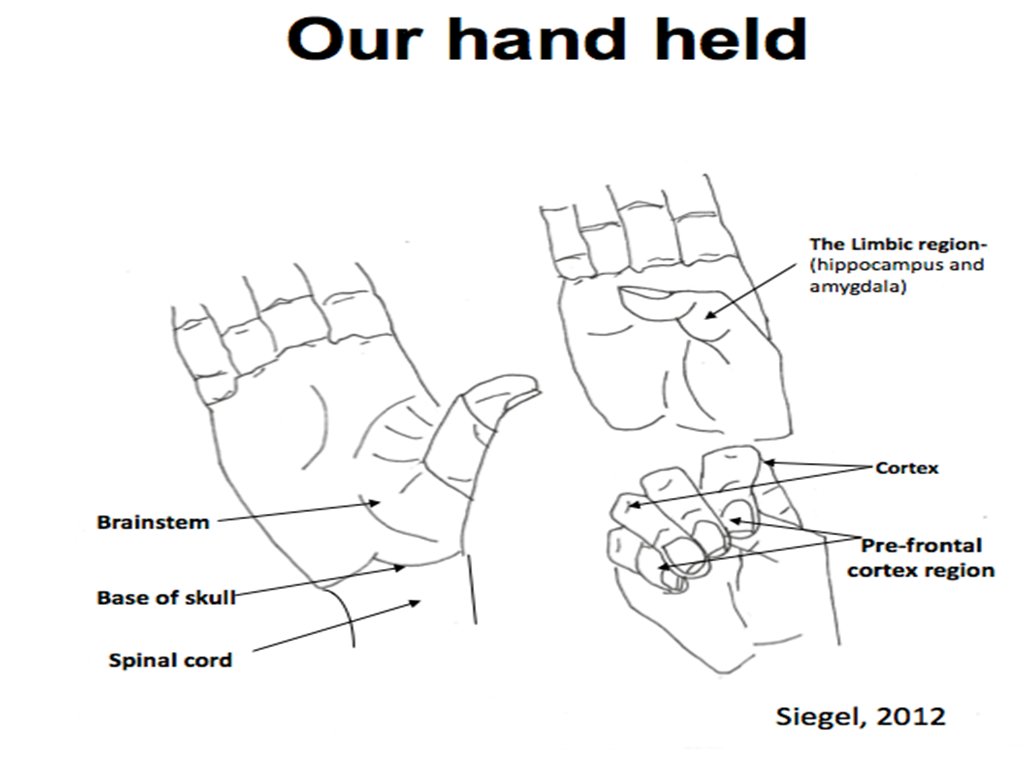
The "downstairs" brain, or lower brain (such as the limbic system), is responsible for our instinctive reactions such as fight, flight, or freeze. The "upstairs" brain, or higher brain (including the prefrontal lobes), is where reasoning, thinking, and decision-making take place.
Research continues to show that our brains are highly adaptable; they can change and grow in response to experiences, even into adulthood.
When we experience strong emotions, we can 'flip our lid', meaning our emotional brain takes over. Young children have not yet developed a wide range of coping strategies. Adults support them by guiding and helping them to regulate their emotions, essentially becoming their "upstairs brain" to bring reasoning and thought.
When a child's limbic system is activated, they try to process what is happening and how they feel. However, because they have a limited ability to rationalise and tend to focus on the present moment, they can become overwhelmed by their emotions. As the rational part of the brain develops, skills such as creativity, reasoning, and critical thinking begin to emerge.
How the brain develops in the early years
The role adults play in early brain development
Attachment and Relationships
"What is believed to be essential for mental health is that an infant and young child should experience a warm, intimate, and continuous relationship with his mother (or permanent care-giver) in which both find satisfaction and enjoyment."
It is unrealistic for a child to always experience perfect interactions in every area of their life, especially when parents are often busy. However, children do need consistent positive experiences for their brains to continue developing strong connections.
A child attending a nursery with skilled and well-trained team members should receive high-quality interactions every day. Building strong relationships plays a vital role in children's brain development and should therefore be prioritised.
The Still Face Experiment - how quickly a child reacts to withdrawal of connection
Behaviour Management Styles
The way adults respond to children's emotions matters enormously. When a child's feelings are dismissed or minimised, they learn that what they feel is wrong. They don't learn to trust their own feelings, which can affect decision-making. They are not given opportunities to self-regulate or problem-solve.
This can lead to suppression of natural emotions, reduced self-regulation, and reliance on distraction to remove emotion - generating more negative feelings such as resentment, guilt, shame, and anger.
Adult interaction styles and what children learn from them
What Is Emotion Coaching?
Emotion coaching involves teaching children about the world of emotion 'in the moment', giving children strategies to deal with ups and downs, helping children accept negative emotions as normal, using moments of difficult behaviour as opportunities for teaching, and building trusting and respectful relationships.
- Watching and being aware
- Recognising the emotion
- Listening and validating
- Labelling to support understanding
- Moving past the emotion together
Emotion coaching in practice
Why This Matters
Every person is unique, and we all respond to situations in our own ways - this is part of what shapes who we are. It is important to separate a child's behaviour from who they are as an individual. The focus should be on what they are doing, not on defining who they are.
Young children can sometimes display challenging behaviour, particularly when they feel uncertain, overwhelmed, or unable to cope in a situation. This may happen if they fear something will go wrong, find a task too difficult, or lack the language and understanding to express how they feel.
It is essential that adults understand a child's stage of development in order to respond appropriately and effectively. By recognising what children are capable of emotionally and cognitively, we can better support them in learning to regulate their feelings.
Through consistent guidance, modelling, and the teaching of emotional literacy, we help children build the skills they need to understand and express their emotions. This support lays the foundation for healthy brain development, enabling the children in our care to grow into resilient, confident adults with strong, well-developed minds.
The Dolphin Team
The Dolphin Pre School and Nursery, Exmouth